

Electricity even when the sun isn’t producing
🟧✓ electricity generation at night
🟧✓ efficient operation in winter
🟧✓ reduced dependence on the grid
🟧✓ ideal in combination with solar systems
Wind turbines for Nordic climate conditions
Wind turbines — electricity even when the sun isn’t producing
Wind generators provide electricity production even when solar panels are not operating at full capacity — at night, during autumn, and throughout winter. In the Nordic countries of Europe, wind is often strongest exactly during these periods, when electricity consumption is at its highest.
Real-world experience shows that during the coldest periods, electricity prices can increase several times over.
By combining wind generators with solar panels and battery storage, it is possible to create a hybrid energy system that provides electricity throughout the entire year.
What does this mean in practice?
🟧✓ electricity even without sunlight
🟧✓ efficient operation during winter and at night
🟧✓ reduced dependence on the grid
🟧✓ ideal combination with battery storage
Important to understand
New technologies (bladeless turbines, vertical-axis systems, wind panels, and micro-turbine solutions) are still in the development stage or designed for very specific applications.
Modern wind generators can start operating at lower wind speeds (~2.5 m/s), however electricity production under such conditions remains very limited.
Real and efficient electricity generation only begins when there is sufficient wind potential.
In the 5–50 kW segment, practical and proven solutions are still based on the classic horizontal-axis wind turbine combined with modern control technology (pitch control).
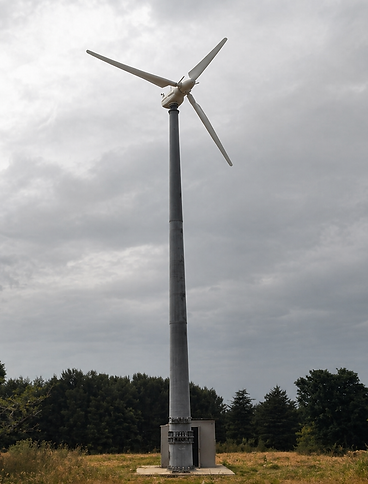
🟧 When there is less sun — wind becomes the primary energy source
What is pitch control and why is it important?
Pitch control wind turbines are currently the most advanced technology in small and medium-scale wind power systems.
This type of turbine is becoming increasingly popular in the Nordic countries, as it provides higher efficiency and better electricity utilization under changing wind conditions.
How does it work?
Unlike simple wind turbines with a fixed blade angle, a pitch control system automatically adjusts the blade angle depending on wind speed.
-
this allows efficient use of both low and strong winds
-
the turbine continuously adapts to real operating conditions
-
in Nordic countries, where wind conditions are often highly variable, this is especially important
What does this mean in practice?
🟧✓ up to ~30% higher annual electricity production
🟧✓ starts operating from ~2.5 m/s (works even in low wind conditions)
🟧✓ optimal power output at rated wind speed (~11 m/s)
🟧✓ efficient performance across the entire operating range
🟧✓ pitch adjustment up to ~9° — better utilization of wind gusts and more stable power output
Important to understand
🟧 Pitch control is not an additional feature
-
it determines how efficiently the turbine uses the wind
🟧 Pitch control technology significantly outperforms traditional fixed-blade wind turbines
-
the difference comes not from the wind itself, but from the technology behind the system

Where do wind turbines operate most efficiently in Latvia and the Baltic states?
An incorrectly selected location can reduce the efficiency of a wind generator several times over.
The efficiency of a wind turbine in the Nordic countries is directly dependent on the average wind speed and the specific location.
Wind generators perform best in coastal areas and open landscapes where airflow is not obstructed.
Near the Baltic Sea and the Gulf of Riga, average wind speeds often reach ~6–7.5 m/s, which is considered sufficient for efficient electricity generation.
Where to install a wind generator
🟧✓ coastal areas (Baltic Sea) — the highest wind potential
🟧✓ open rural areas without obstacles
🟧✓ locations near large bodies of water (rivers, lakes)
🟧✓ elevated and wind-exposed areas
🟧✓ recommended average wind speed for efficient operation: from ~6 m/s
Important to understand
🟧✓ the generator can still operate at lower wind speeds
🟧✓ the main requirement is an open location without forests, buildings, or other obstacles
Specific situations
🟧✓ terrain and the “wind tunnel effect” can significantly increase wind speed
🟧✓ wind can concentrate in specific locations, even if this is not visible on standard wind maps
🟧✓ for accurate evaluation, long-term measurements with an anemometer over a one-year period are recommended


Wind turbine installation in Latvia — key requirements and approvals
Wind turbine installation in Latvia and the Baltic states depends on the location, wind conditions, mast height, and distance to neighboring properties. In many cases, a simplified approval process and a visual project representation are sufficient.
🟧 Key requirements
🟧✓ municipal approval is required
🟧✓ distance to neighboring properties ~20–50 m
🟧✓ mast height up to ~20 m simplifies installation
🟧✓ open location without forests and buildings
🟧✓ possibility to connect to the grid or a hybrid system
🟧 Mast height and technical logic
🟧✓ we offer 5–50 kW wind turbines with 8 m, 12 m, and 20 m masts
🟧✓ these heights are optimized for this power range
🟧✓ ensure efficient operation without complex engineering and design
Support and financing
🟧✓ ALTUM — for businesses (loans, guarantees, capital rebate)
🟧✓ Lauku atbalsta dienests — for farmers (up to ~40–80%)
🟧✓ EU funds and EKII programs
🟧 Why we focus on up to 20 m
🟧✓ optimal balance between efficiency and simple installation
🟧✓ manufacturer-recommended height for this power range
🟧✓ faster implementation without unnecessary bureaucracy
🟧 What changes above 20 m
🟧✓ a full construction project is required
🟧✓ more complex approval process and longer timelines
🟧✓ higher costs and additional restrictions
🟧 Approval process in practice
🟧✓ often a simplified approval with the municipality is sufficient
🟧✓ a visual representation of the solution may be required
🟧✓ requirements depend on the specific location
Wind turbine installation is simpler than it may seem — in most cases, it primarily requires a properly prepared foundation and mast.

Ask us — we’ll advise and share our experience
+371 20729077
or contact us
🟧 50 kW horizontal wind turbine (Pitch Control) — package contents
Technical specification
Rated power: 50 kW
Maximum power: 55 kW
Cut-in wind speed: 2.5 m/s
Rated wind speed: 14 m/s
Operating wind speed: 3–30 m/s
Survival wind speed: up to 60 m/s
Rotor diameter: 14 m
Blade length: 6.2 m (3 pcs.)
Swept area: 148.2 m²
Blade material: fiber-reinforced plastic (FRP)
Generator weight: ~3000 kg
Rated rotational speed: 105 rpm
Rated voltage: 400 V AC
Starting torque: < 0.3 N·m
Operation and control system
🟧✓ automatic wind orientation (yaw system)
🟧✓ pitch control technology (blade angle adjustment)
🟧✓ upwind configuration
🟧✓ automatic braking
🟧✓ smart protection in strong wind conditions
🟧✓ autonomous operation
Operation conditions
Protection class: IP54
Operating temperature: -20 to +50 °C
Service life: ~20 years
Controller with dump load GT-PCTC-50kW
🟧✓ wind turbine control and management unit
🟧✓ AC/DC conversion and power optimization
🟧✓ dump load protection (safety in high wind conditions)
🟧✓ compatible with Solis / Deye inverters
🟧✓ remote monitoring
Technical parameters
Rated power: 50 kW
Input: AC 380–520 V (from generator)
Output: DC to inverter
Efficiency: up to ~97%
Protection: dump load + PWM control
Operating temperature: -30 to +60°C
Communication: RS485 / WiFi / Ethernet
🟧 Hybrid inverter: DEYE SUN-50K-SG (3-phase)
🟧✓ 50 kW / 3-phase
🟧✓ battery connection supported
🟧✓ backup mode (operates without grid)
🟧✓ multiple MPPTs – stable energy production
🟧✓ suitable for commercial systems
🟧✓ load optimization (peak shaving)
🟧✓ all generated electricity can be used on-site (zero export)
🟧✓ integrated scheduling (Nord Pool logic)
🟧✓ automated energy management
🟧✓ option to connect a backup generator
automatic start when needed
Technical specification
Batteries: LV or HV (depending on configuration)
Energy storage and discharge
Hybrid system (PV + battery + grid + generator)
Generator port (suitable for wind and backup generator)
Protection: IP65
Dimensions: ~700 × 575 × 300 mm
Weight: ~70 kg
🟧 Free-standing mast – 20 m
🟧✓ material: high-strength steel
(Q355 / Q235 depending on configuration)
high durability and long service life
🟧✓ conical welded structure
stability and optimal load distribution
🟧✓ steel thickness: ~10 mm
🟧✓ with integrated ladder
convenient and safe access for maintenance
🟧✓ with service platform
safe maintenance access at the generator
🟧✓ surface treatment: hot-dip galvanization
long-term protection against corrosion


🟧 30 kW horizontal wind turbine (Pitch Control) — package contents
Technical specification
Rated power: 30 kW
Maximum power: up to ~35 kW
Cut-in wind speed: ~2.5 m/s
Rated wind speed: 11 m/s
Operating wind speed: 3–30 m/s
Survival wind speed: up to 60 m/s
Rotor diameter: 12 m
Blades: 3 pcs. (FRP composite material)
Swept area: ~110 m²
Rated rotational speed: 180 rpm
Rated voltage: 400 V AC
Operating system
🟧✓ pitch control technology (blade angle adjustment)
🟧✓ automatic wind orientation (yaw system)
🟧✓ upwind configuration
🟧✓ automatic braking
🟧✓ smart protection in strong wind conditions
🟧✓ stable operation in variable conditions
Why 30 kW is an optimal solution
🟧✓ rated power achieved at lower wind speed (11 m/s)
more efficient performance in real Latvian conditions
🟧✓ optimal mast height (~20 m)
better balance between wind availability and installation costs
Controller with dump load GT-PCTC-30kW
🟧✓ wind turbine control and management unit
🟧✓ AC/DC conversion and power optimization
🟧✓ dump load protection (safety in high wind conditions)
🟧✓ compatible with Solis / Deye inverters
🟧✓ remote monitoring
Technical parameters
Rated power: 30 kW
Input: AC 48–380 V (from generator)
Output: DC to battery / inverter
MPPT voltage range: ~90–520 V
Protection: PWM dump load + automatic braking
Operating temperature: -25 to +50 °C
Communication: RS485 / WiFi / Ethernet
Dimensions: 343 × 605 × 970 mm
Weight: ~70 kg
🟧 Hybrid inverter: DEYE SUN-30K-SG (3-phase)
🟧✓ 30 kW / 3-phase
🟧✓ battery connection (LV / HV)
🟧✓ backup mode (operates without grid)
🟧✓ multiple MPPTs – stable energy production
🟧✓ suitable for homes and businesses
🟧✓ load optimization (peak shaving)
🟧✓ all generated electricity is used on-site (zero export)
🟧✓ integrated scheduling (Nord Pool logic)
🟧✓ automated energy management
🟧✓ option to connect a backup generator
automatic start when needed
Technical specifications
Energy storage and discharge:
Hybrid (PV + battery + grid + generator)
Generator port (compatible with wind and backup generator)
Protection rating: IP65
Dimensions: 650 × 500 × 250 mm
Weight: 60 kg
🟧 Free-standing mast – 20 m
🟧✓ material: high-strength steel
(Q355 / Q235 depending on configuration)
high durability and long service life
🟧✓ conical welded structure
stability and optimal load distribution
🟧✓ steel thickness: ~10 mm
🟧✓ with integrated ladder
safe and convenient access for maintenance
🟧✓ with service platform
safe access for generator maintenance
🟧✓ surface treatment: hot-dip galvanization
long-term protection against corrosion


🟧 20 kW horizontal wind turbine (Pitch Control) — package contents
Technical Specification
Rated Power: 20 kW
Maximum Power: up to ~23 kW
Cut-in Wind Speed: ~2.5 m/s
Rated Wind Speed: 11 m/s
Operating Wind Speed: 3–30 m/s
Survival Wind Speed: up to 60 m/s
Rotor Diameter: 9.8 m
Blades: 3 pcs (FRP composite material)
Swept Area: ~75 m²
Rated Rotor Speed: 180 rpm
Rated Voltage: 400 V AC
Operating System
🟧✓ Pitch control technology (blade angle adjustment)
🟧✓ Automatic wind orientation (yaw system)
🟧✓ Upwind configuration
🟧✓ Automatic braking system
🟧✓ Intelligent protection in strong winds
🟧✓ Stable operation in variable conditions
Operation
Protection Class: IP54
Operating Temperature: -20 to +50 °C
Service Life: ~20 years
Controller with dump load – GT-PCTC-20kW
🟧✓ wind turbine control and management unit
🟧✓ AC/DC conversion with power optimization
🟧✓ integrated dump load protection (safety in high wind conditions)
🟧✓ compatible with Solis / Deye inverters
🟧✓ remote monitoring capability
🟧✓ adaptable for 48V / 96V / high-voltage (HV) systems
Technical parameters
Rated power: 20 kW
Input: AC 48–380 V (from generator)
Output: DC to battery / inverter
MPPT voltage range: ~90–520 V
Protection: PWM dump load + automatic braking
Operating temperature: -25 to +50 °C
Communication: RS485 / WiFi / Ethernet
Dimensions: ~320 × 580 × 900 mm
Weight: ~60 kg
🟧 Hybrid inverter: Deye SUN-20K-SG (3-phase)
🟧✓ 20 kW / 3-phase
🟧✓ battery connection (LV / HV)
🟧✓ backup mode (operates without grid)
🟧✓ multiple MPPTs – stable energy production
🟧✓ suitable for homes and businesses
🟧✓ load optimization (peak shaving)
🟧✓ all generated electricity is used on-site (zero export)
🟧✓ integrated scheduling (Nord Pool logic)
🟧✓ automated energy management
🟧✓ option to connect a backup generator
automatic start when needed
🟧✓ full integration with wind turbine (via controller)
Technical specification
Energy storage and discharge
Hybrid system (PV + battery + grid + generator)
Generator port: suitable for wind and backup generator
Protection: IP65
Dimensions: 520 × 420 × 230 mm
Weight: 45 kg
🟧 Free-standing mast – 12 m
🟧✓ material: Q355 steel
high strength and long service life
🟧✓ conical welded structure
stability and optimal load distribution
🟧✓ steel thickness: 10 mm
🟧✓ surface treatment: hot-dip galvanization
protection against corrosion


🟧 10 kW horizontal wind turbine (Pitch Control) — package contents
Technical specification
Rated power: 10 kW
Maximum power: up to ~12 kW
Cut-in wind speed: ~2.5 m/s
Rated wind speed: 10 m/s
Operating wind speed: 3–30 m/s
Survival wind speed: up to 60 m/s
Rotor diameter: 7.78 m
Blades: 3 pcs. (FRP composite material)
Swept area: 47.5 m²
Rated rotational speed: 180 rpm
Rated voltage: DC 400 V
Weight: ~550 kg
Protection class: IP54
Operating temperature: -20 to +50 °C
Service life: ~20 years
Operating system
🟧✓ pitch control technology (blade angle adjustment)
🟧✓ automatic wind orientation (yaw system)
🟧✓ upwind configuration
🟧✓ automatic braking (pitch + electromagnetic)
🟧✓ smart protection in strong wind conditions
🟧✓ stable operation in variable conditions
🟧✓ efficient performance even at low and variable wind speeds
Controller with dump load – GT-PCTC-10kW
🟧✓ wind turbine control and management unit
🟧✓ AC/DC conversion with power optimization
🟧✓ integrated dump load protection (safety in high wind conditions)
🟧✓ compatible with Solis / Deye inverters
🟧✓ remote monitoring capability
🟧✓ adaptable for 48V / 96V / high-voltage (HV) systems
Technical parameters
Rated power: 10 kW
Input: AC 48–380 V (from generator)
Output: DC to battery / inverter
MPPT voltage range: ~90–520 V
Protection: PWM dump load + automatic braking
Operating temperature: -25 to +50 °C
Communication: RS485 / WiFi / Ethernet
Dimensions: 320 × 580 × 900 mm
Weight: 55 kg
🟧 Hybrid inverter: Deye SUN-10K-SG (3-phase)
🟧✓ 10 kW / 3-phase
🟧✓ battery connection (LV / HV)
🟧✓ backup mode (operates without grid)
🟧✓ multiple MPPTs – stable energy production
🟧✓ suitable for homes and businesses
🟧✓ load optimization (peak shaving)
🟧✓ all generated electricity is used on-site (zero export)
🟧✓ integrated scheduling (Nord Pool logic)
🟧✓ automated energy management
🟧✓ option to connect a backup generator
automatic start when needed
🟧✓ full integration with wind turbine (via controller)
Technical specification
Energy storage and discharge
Hybrid system (PV + battery + grid + generator)
Generator port: suitable for wind and backup generator
Protection: IP65
Dimensions: 430 × 360 × 200 mm
Weight: 30 kg
🟧 Free-standing mast – 12 m
🟧✓ material: Q355 steel
high strength and long service life
🟧✓ conical welded structure
stability and optimal load distribution
🟧✓ steel thickness: 10 mm
🟧✓ surface treatment: hot-dip galvanization
protection against corrosion


🟧 5 kW horizontal wind turbine (Pitch Control) — package contents
Technical Specification
Rated power: 5 kW
Maximum power: up to ~6 kW
Cut-in wind speed: ~2.5 m/s
Rated wind speed: 10 m/s
Operating wind speed: 3–30 m/s
Survival wind speed: up to 60 m/s
Rotor diameter: 5.6 m
Blades: 3 pcs. (FRP composite material)
Rotor swept area: 24 m²
Rated rotational speed: 240 RPM
Rated voltage: DC 400 V / DC 240 V
Weight: 400 kg
Protection class: IP54
Operating temperature: -20 to +50 °C
Operating system
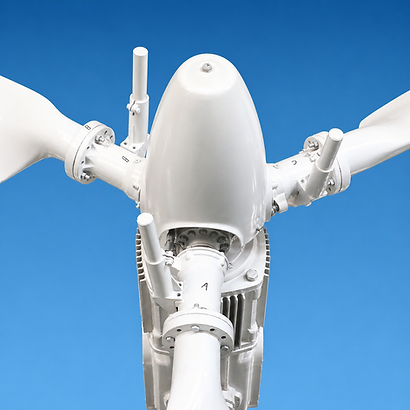
🟧✓ pitch control technology (blade angle adjustment)
🟧✓ automatic wind orientation (yaw system)
🟧✓ upwind configuration
🟧✓ automatic braking system (pitch + electromagnetic)
🟧✓ smart protection in strong winds
🟧✓ stable operation under changing conditions
🟧✓ efficient performance even in low and variable wind conditions

Controller with dump load – GT-PCTC-5kW
🟧✓ wind turbine control and management unit
🟧✓ AC/DC conversion with power optimization
🟧✓ integrated dump load protection (safety in high wind conditions)
🟧✓ compatible with Solis / Deye inverters
🟧✓ remote monitoring capability
🟧✓ adaptable for 48V / 96V / high-voltage (HV) systems
Technical parameters
Rated power: 5 kW
Input: AC 48–380 V (from generator)
Output: DC to battery / inverter
MPPT voltage range: ~90–520 V
Protection: PWM dump load + automatic braking
Operating temperature: -25 to +50 °C
Communication: RS485 / WiFi / Ethernet
Dimensions: 300 × 500 × 800 mm
Weight: 45 kg

🟧 Hybrid inverter: Deye SUN-5K-SG (3-phase)
🟧✓ 5 kW / 3-phase
🟧✓ battery connection (LV / HV)
🟧✓ backup mode (operates without grid)
🟧✓ multiple MPPTs – stable energy production
🟧✓ suitable for homes and small-scale applications
🟧✓ load optimization (peak shaving)
🟧✓ all generated electricity is used on-site (zero export)
🟧✓ integrated scheduling (Nord Pool logic)
🟧✓ automated energy management
🟧✓ option to connect a backup generator
automatic start when needed
🟧✓ full integration with wind turbine (via controller)
Technical specification
Energy storage and discharge
Hybrid system (PV + battery + grid + generator)
Generator port: suitable for wind and backup generator
Protection: IP65
Dimensions: 330 × 300 × 180 mm
Weight: 25 kg

🟧 Free-standing mast – 8 m
🟧✓ material: Q355 steel
high strength and long service life
🟧✓ conical welded structure
stability and optimal load distribution
🟧✓ steel thickness: 10 mm
🟧✓ surface treatment: hot-dip galvanization
protection against corrosion


Wind turbines in Latvia – Frequently Asked Questions (FAQ)
Do wind turbines work in Latvia?
Yes, wind turbines operate efficiently in Latvia, especially in coastal areas and open landscapes with an average wind speed of ~6 m/s or higher. Choosing the right location is the key factor that determines electricity generation.
Do wind turbines generate electricity at night?
Yes, wind turbines generate electricity at night, as well as in autumn and winter, when solar panels are not operating at full capacity. These are often the periods with higher wind potential in Latvia.
What type of wind turbine is suitable for a home in Latvia?
For residential use in Latvia, 5–50 kW wind turbines with pitch control technology are most suitable, as they ensure efficient operation in variable wind conditions.
What is the minimum wind speed required?
Wind turbines can start operating from ~2.5 m/s, but for efficient electricity generation, an average wind speed of ~6 m/s or higher over the year is recommended.
Is a permit required to install a wind turbine?
Yes, in Latvia, wind turbine installation typically requires municipal approval. Smaller projects (up to ~20 m mast height) often have a simplified procedure.
What distance should be maintained from neighboring properties?
Typically ~20–50 meters, depending on municipal requirements and the mast height of the turbine.
Can a wind turbine be combined with solar panels?
Yes, combining a wind turbine with solar panels and battery storage creates a hybrid energy system that ensures stable electricity supply throughout the year.
Is battery storage necessary?
Battery storage is not mandatory, but it significantly improves system efficiency by allowing energy to be stored and used later.
What is pitch control technology?
Pitch control is a system that automatically adjusts the blade angle depending on wind speed, increasing energy production by up to
~30% and improving stability.
What you gain
🟧✓ lower electricity costs
🟧✓ stable energy all year
🟧✓ protection from price fluctuations
🟧✓ reduced dependence on the grid
🟧 You are not just installing a wind turbine.
🟧 You are taking control of your electricity costs — all year round.

Have questions? — We’ll advise and share our experience
📞 +371 20729077
✉️ or write to us:
👉 https://www.sundirect.lv/kontakti