Why Is Wind Turbine Mast Height Critically Important and What Is the Difference Between a 10 m and 20 m Mast?
- May 15
- 3 min read

Many people initially focus only on wind turbine power.
However, in real-world conditions, one of the most important factors for small and medium-sized wind turbines is:
mast height.
Mast height directly affects:
🟧✓ electricity production
🟧✓ wind turbine efficiency
🟧✓ turbulence levels
🟧✓ system stability
🟧✓ return on investment
The higher the wind turbine is installed, the:
🟧✓ more stable the wind
🟧✓ lower the turbulence
🟧✓ higher the average wind speed
🟧✓ greater the electricity production
And turbulence is one of the biggest problems with low mast installations.
Trees, buildings, terrain and even relatively small obstacles create air vortices that:
🟧✓ reduce wind turbine efficiency
🟧✓ increase vibrations
🟧✓ create mechanical stress
🟧✓ reduce system lifespan
~10 m mast for a wind turbine
A 10 m mast is typically suitable for:
🟧✓ open areas
🟧✓ smaller 5–10 kW wind turbines
🟧✓ locations without nearby trees or buildings
However:
⚠️ at lower heights, turbulence is often still high.
Especially:
🟧✓ near forests
🟧✓ in residential areas
🟧✓ in uneven terrain
🟧✓ in locations with unstable wind conditions
As a result:
the wind turbine operates less efficiently and produces less electricity.
20 m mast — completely different wind turbine efficiency
At 20 m height, the wind usually becomes:
🟧✓ more stable
🟧✓ more consistent
🟧✓ significantly less turbulent
Meteorological measurements and wind industry data clearly show:
the difference between 10 m and 20 m height is often much greater than people initially expect.
Depending on terrain and surrounding conditions:
🟧✓ average wind speed at 20 m height is often ~10–30% higher than at 10 m
🟧✓ turbulence levels are usually significantly lower
🟧✓ wind conditions become much more stable
It is important to understand:
wind turbine output does not increase linearly.
In practice:
the difference can sometimes be several times greater.
Especially:
🟧✓ in turbulent environments
🟧✓ near forests
🟧✓ in residential areas
🟧✓ with low mast installations
The reason is simple:
wind energy increases approximately with the cube of wind speed.
For example:
If the average wind speed increases:
from 5 m/s to 6.5 m/s
Then the theoretical wind energy potential increases approximately:
(6.5 / 5)³ ≈ 2.2
This means:
more than 2x higher energy potential.
Of course, in real-world operation there are also:
🟧✓ wind turbine efficiency factors
🟧✓ controller limitations
🟧✓ turbulence losses
🟧✓ varying wind conditions
However, the overall principle is extremely important:
⚠️ even a relatively small increase in wind speed can create a massive difference in electricity production.
That is why in professional wind energy projects:
mast height is often more important than nominal wind turbine power itself.
Wind turbines in Nordic climate conditions
In the Baltics and Nordic region:
🟧✓ wind intensity often increases during autumn and winter
🟧✓ heating demand also rises during this period
🟧✓ wind turbines begin operating at their highest efficiency
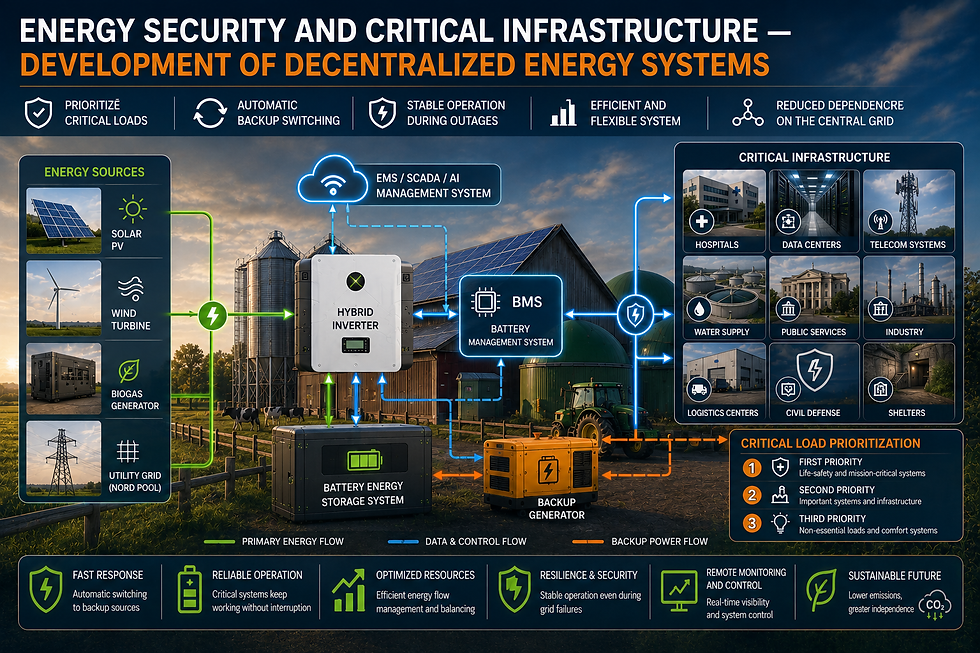
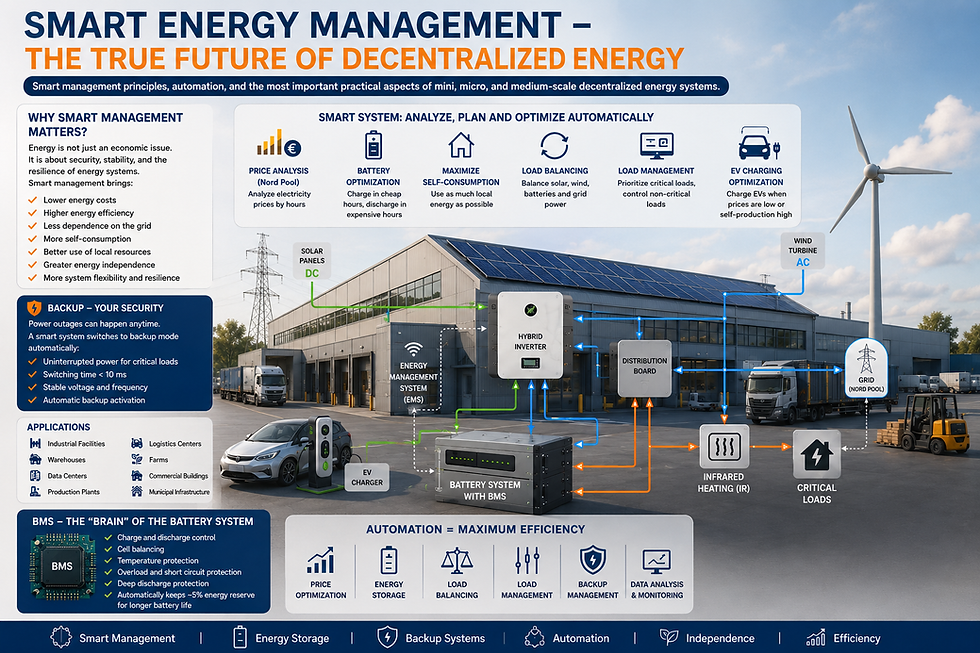
That is why wind turbines combined with:
🟧✓ solar panels
🟧✓ battery storage
🟧✓ infrared heating
🟧✓ Nord Pool optimization
…can become a highly effective energy solution for Nordic climates.
Practical reality
Many people mistakenly try to:
reduce costs by using a lower mast.
However, in practice:
⚠️ a mast that is too low can reduce wind turbine efficiency several times over.
That is why professional wind energy projects always evaluate:
🟧✓ terrain
🟧✓ surrounding obstacles
🟧✓ tree height
🟧✓ average wind speed
🟧✓ turbulence levels