Small and Medium Wind Turbines Designed for Nordic Climate Conditions — Electricity Also During Winter and at Night
- May 6
- 4 min read

In Latvia and other Nordic climate countries, a single energy source usually cannot provide stable electricity production throughout the entire year.
Solar panels have become increasingly popular in recent years, and in Latvia they can deliver very good performance during spring, summer, and partly autumn. However, during winter — when electricity consumption often increases the most — solar production decreases.
This is where wind turbines become especially valuable.
In Nordic climates, wind activity is often stronger during autumn, winter, and nighttime — exactly when solar panels produce less electricity or stop producing altogether.
That is why wind turbines can become a very important part of a modern energy system.
🟧 Solar and Wind Work at Different Times
Solar panels:
🟧✓ produce electricity during daytime
🟧✓ achieve higher output during spring and summer
🟧✓ perform very well on sunny days
Wind turbines:
🟧✓ generate electricity at night
🟧✓ are often more productive during autumn and winter
🟧✓ can provide a more stable annual energy balance
🟧✓ work very well together with solar systems
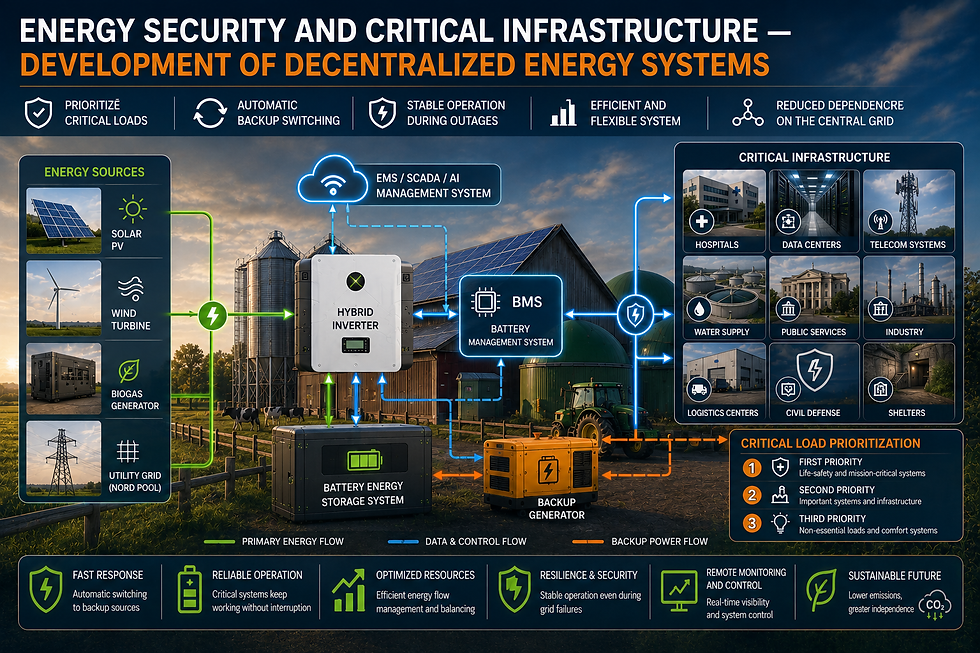
This is exactly why more and more energy systems are being designed as hybrid solutions:
solar + wind + battery storage + smart energy management.
🟧 What Is Usually Included in the Small and Medium Wind Turbine Category?
Small and medium wind turbines are generally classified within the 5–50 kW segment.
In practice, this category most commonly includes:
🟧✓ 5 kW wind turbines
🟧✓ 10 kW wind turbines
🟧✓ 20 kW wind turbines
🟧✓ 30 kW wind turbines
🟧✓ 50 kW wind turbines
Depending on the property and electricity consumption, it is possible to choose both compact systems and much more advanced energy platforms with battery storage, backup power supply, and smart energy management.
🟧 Why Can Wind Turbines Be Especially Effective in Nordic Countries?
A large part of Northern Europe is located within the coastal zones of the Baltic Sea and the North Sea, where wind conditions are often highly suitable for efficient electricity production.
Open landscapes, sea influence, and relatively free airflow create favorable conditions for wind energy in many regions.
Simply put — wind flows can develop more freely.
This is one of the reasons why wind energy has become one of the key electricity generation sources across many Nordic countries.
Of course, every location must be evaluated individually, because performance is strongly affected by:
🟧✓ terrain
🟧✓ surrounding buildings
🟧✓ forests
🟧✓ tower height
🟧✓ average wind speed at the specific location
However, overall, Nordic climate conditions and coastal regions often provide very good opportunities for small and medium wind turbine systems.

🟧 Why the Right Technology Matters in Nordic Climate Conditions
Not all wind turbines operate the same way.
For small and medium wind turbines, the ability to adapt efficiently to changing weather conditions and gusty winds typical for Nordic climate conditions is extremely important.
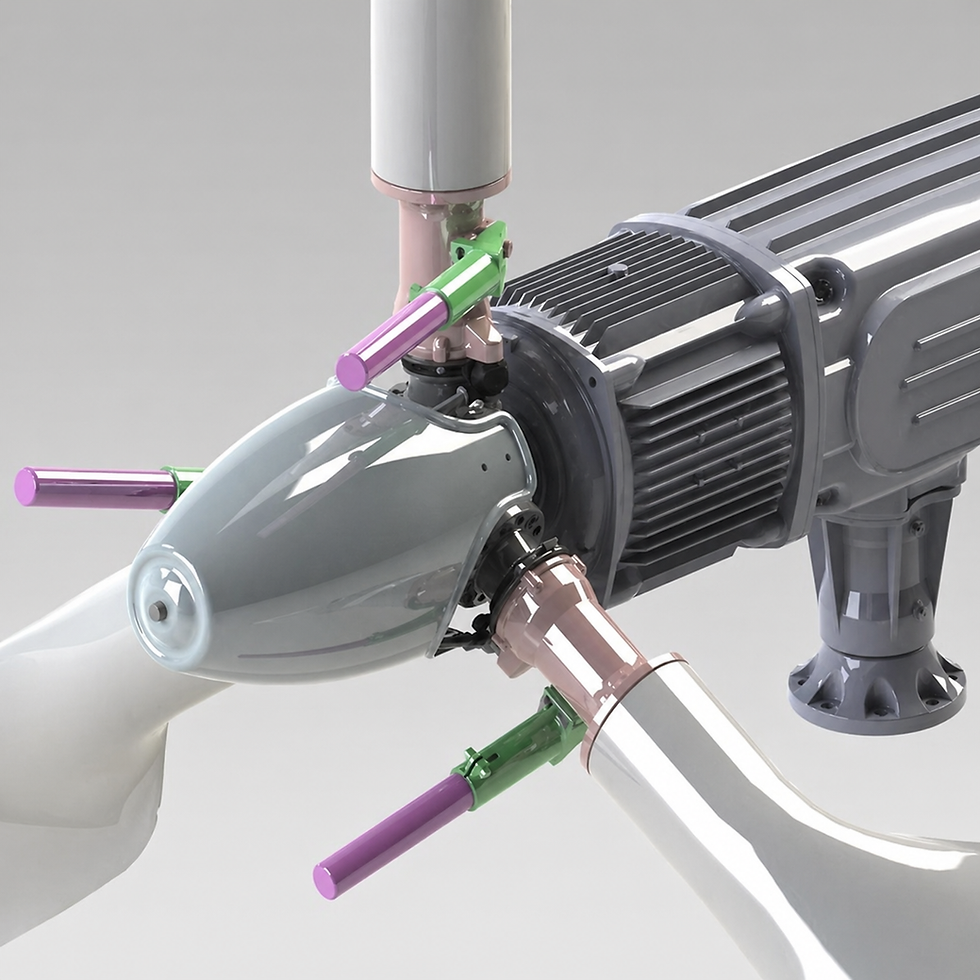
This is why pitch control technology is becoming increasingly important.
A pitch control system automatically adjusts the blade angle depending on wind speed.
This allows the turbine to:
🟧✓ use weak and changing wind more efficiently
🟧✓ stabilize turbine operation
🟧✓ reduce overload risks
🟧✓ improve total annual energy production
🟧✓ operate more safely during strong winds
Today, this technology is considered one of the key advantages of modern horizontal wind turbines in the 5–50 kW segment.
🟧 Will a Wind Turbine Work Efficiently?
This mainly depends on the location.
The most important factors are:
🟧✓ average wind speed
🟧✓ surrounding terrain
🟧✓ distance from forests and buildings
🟧✓ proximity to open areas or large bodies of water
🟧✓ tower height
Usually, the best conditions are found in:
🟧✓ open rural areas
🟧✓ coastal locations or near large bodies of water
🟧✓ elevated and exposed locations
🟧✓ places with stable airflow
In many cases, even relatively small terrain differences can significantly affect performance.
That is why it is important to evaluate each specific property individually instead of relying only on theoretical calculations.
🟧 Wind Turbines Are Becoming Part of Modern Energy Systems
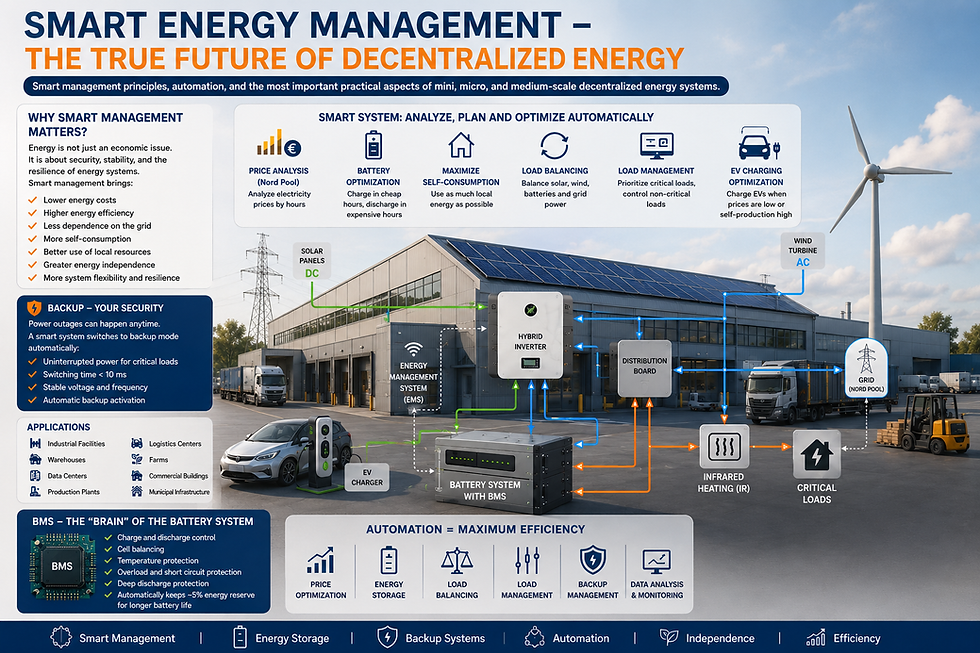
Modern small and medium wind turbines increasingly serve not as standalone devices, but as part of a larger integrated energy system.
These systems become particularly powerful when combined with:
🟧✓ solar panels
🟧✓ battery storage
🟧✓ Nord Pool optimization
🟧✓ backup power systems
🟧✓ EV charging
🟧✓ infrared heating
This approach allows users to:
🟧✓ use self-generated electricity more intelligently
🟧✓ reduce dependence on electricity price fluctuations
🟧✓ increase energy independence
🟧✓ stabilize long-term electricity costs
This is why more and more modern Nordic energy systems are being designed as one integrated platform rather than separate standalone solutions.
🟧 A Common Mistake Many People Make
One of the biggest mistakes is choosing a wind turbine based only on price.
For small and medium wind turbines, the following factors are extremely important:
🟧✓ real technology
🟧✓ controller quality
🟧✓ inverter capabilities
🟧✓ safety systems
🟧✓ service availability
🟧✓ spare parts
🟧✓ manufacturer experience
The internet is full of attractive advertisements and “miracle technologies,” but in reality, long-term results depend mainly on reliability and proper system integration.
🟧 Wind Turbines and Infrared Heating — A Particularly Interesting Combination for Nordic Climate Conditions.
Wind turbines become even more interesting when the generated electricity is used not only for household consumption, but also for heating.
This is where infrared heating offers a major advantage.
Unlike traditional convection heating, infrared heaters convert electricity into direct heat for people, floors, walls, and other surfaces instead of trying to heat the entire air volume.
This allows users to:
🟧✓ use self-generated electricity more efficiently
🟧✓ reduce heat losses
🟧✓ maintain comfort even at lower air temperatures
🟧✓ use wind and solar energy more intelligently
🟧✓ reduce long-term heating costs
This is exactly why more and more modern energy systems are being designed as one integrated platform:
wind + solar + batteries + infrared heating + smart energy management.